Digital electric cabinet smoker
Set a number, load the racks, add a handful of chips. The least demanding smoker there is, and the most bounded.
- Runs on Electricity
- Smoke Wood chips
- Attention Set it and leave it
- Feeds A full table
- Learning Forgiving to learn
- Moving it Movable, with effort
- Needs Mains power
What it is good at, and what is harder
What it is good at
- Temperature is set on a panel and held by an element, so there is no fire to learn and nothing to feed.
- An insulated cabinet with racks up its height holds a lot of food for its footprint.
- It runs the same in January as in July, because nothing about it depends on how a fire is behaving.
- Nothing to clear out but the chip tray and the grease tray; there is no ash.
What is harder
- The controller stops at 135 °C. It cannot sear, cannot crisp a chicken skin, and cannot roast at a browning temperature.
- It needs mains power outdoors for the whole cook, with an earthed socket and an outdoor-rated cord.
- Half a cup of chips at a time, checked and replaced — the smoke is a consumable rather than a by-product of the fire.
- It still emits carbon monoxide, because the chips are burning even though the element is not, so it is no more an indoor cooker than a charcoal one.
The comparisons on this page are BBQHQ's reading of each maker's own manual set beside the others. No manufacturer here has said anything about a competitor's cooker, and none would be admitted as evidence if it had.
Carbon monoxide — read this first
Do not use this in an enclosed space — including a garage, a tent, a porch or a shed with the door shut. BBQHQ has no manufacturer instruction permitting it.
This is recorded from a source, never inferred from what it burns. BBQHQ does not derive indoor safety from the absence of combustion — an electric cooker still presents fire and smoke risk, and only its own manufacturer’s instruction can permit enclosed-space use.
How it works
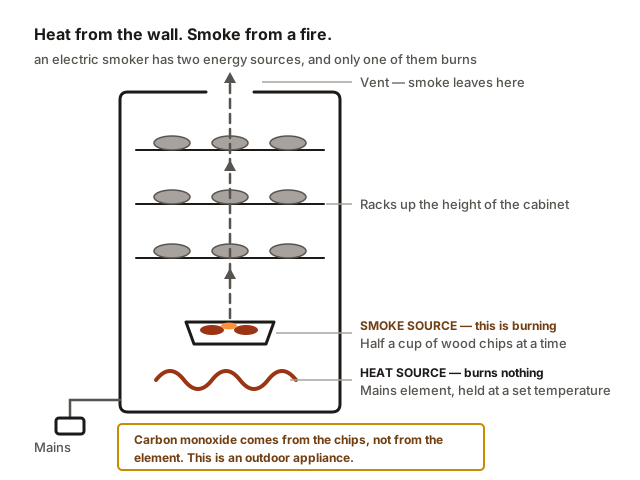
An insulated upright box with a mains heating element in the base, a tray of wood chips above it and racks up the height of the cabinet. It is the only cooker here where the heat burns nothing and the smoke still does — which is why it is not a machine you can bring inside.
What heats it
- Electricity
Mains power driving a heating element, or a controller and fan on a cooker that burns something else. Produces no carbon monoxide — which says nothing whatever about whether the appliance may be used indoors.
Where the smoke comes from
- Wood chips
Small pieces that ignite quickly and are spent quickly. Suited to short cooks and to gas grills, where they go in a box over a burner because there is no fire for them to sit beside.
What you can cook on it
Smoking — Designed for this
Low and slow — Designed for this
Indirect heat — Possible with the right setup
- The cabinet tops out at 135 °C, which is below the temperature most indirect roasting is done at.
What it will not do: direct heat, two-zone fire. That is a fact about the architecture rather than a gap in the evidence — no accessory changes it.
Is this the one for you?
Written as conditions rather than as types of cook, because the same person wants different things in June and in November.
Get this if
- You want smoked food and have no interest in managing a fire to get it.
- You smoke fish, cheese, or anything else that wants a low steady temperature and no colour.
- You have an outdoor socket and somewhere sheltered but genuinely open to put it.
Look at something else if
- You want one cooker that smokes and also grills; this one only does the first half.
- There is no mains power where you cook, or the cooking happens away from the house.
Your first cook on it
- Season it empty before the first cook: three hours at the top setting with a load of chips near the end.
- Preheat for half an hour before the food goes in, and leave space between racks so heat can circulate.
- If the chips will not smoke at a low setting, take it up to the ceiling for ten minutes and then bring it back down.
Worth cooking on it
Techniques it supports
Cooking with the lid down and the fire to one side, turning the barbecue into an oven that happens to smell of woodsmoke. The default for anything large.
Bring the food up slowly on indirect heat, then finish it hot and fast over direct. One method, two heat configurations, in that order — which is exactly why the technique and the fire arrangement are described separately here.
Many hours at low temperature with smoke, until collagen-rich cuts become tender. The method that gives American barbecue its name and its arguments.
Looking after it
Keeping it working, which is a different subject from keeping it safe. The safety rules are above and below; these are the jobs that decide whether it still holds a temperature in three years.
- Empty the chip tray when it is cold, before and after each cook; old ash prevents the next load smouldering.
- Check the grease tray during long cooks rather than after them.
- Keep the door seal clean and adjust the latch if smoke starts escaping around it rather than out of the vent.
Safety for this cooker
Electric smokers still produce carbon monoxide — from the wood, not the element
An electric smoker's heat comes from a mains element that burns nothing, and the appliance still emits carbon monoxide, because the wood chips it makes smoke with are burning inside the cabinet. Masterbuilt warns that burning wood chips gives off carbon monoxide, which has no odour and can cause death, and that chips must never be burned inside homes, vehicles, tents, garages or any enclosed area.
The inference that kills is: no combustion, therefore no carbon monoxide, therefore this one is fine in the garage. It is wrong twice over on an electric smoker. The ENERGY source produces no carbon monoxide and the APPLIANCE does, because heat and smoke come from two different places — which is the distinction this catalogue has always modelled and had never been able to state as a hazard. The warning is a manufacturer's, about its own appliance, and it works against that manufacturer's commercial interest in electric smoking seeming cleaner than charcoal.
Where this comes from
An electric smoker emits carbon monoxide even though its energy source produces none. Its heat is a mains element; its smoke is wood chips burning on a tray inside the cabinet, and the maker warns that burning wood chips gives off carbon monoxide, which has no odour and can cause death.
Well supported
Masterbuilt Manufacturing, LLC — States this directly
“CARBON MONOXIDE HAZARD — Burning wood chips gives off carbon monoxide, which has no odor and can cause death. DO NOT burn wood chips inside homes, vehicles, tents, garages or any enclosed areas. Use only outdoors where it is well ventilated.”
- The statement that separates energy from smoke as a hazard and not only as a model. The appliance's heat is a mains element and produces no carbon monoxide. Its smoke is wood combusting on a tray inside the cabinet, and that does. An electric smoker therefore emits carbon monoxide while running on a fuel that emits none.
- A manufacturer instructing on its own appliance, which is the one thing such a source may always be cited for — and the manufacturer here has a commercial interest in electric smokers seeming SAFER than charcoal, which makes the warning evidence against its own interest.
About this source · Original · retrieved 2026-08-20
Masterbuilt Manufacturing, LLC — States this directly
“Smoker is for OUTDOOR HOUSEHOLD USE ONLY. Never use inside enclosed areas such as patios, garages, buildings or tents. ... Never use smoker as a heater (READ CARBON MONOXIDE HAZARD).”
- The second independent manufacturer instruction — after SharkNinja's — restricting an ELECTRICALLY POWERED cooker to outdoors. Two makers of electric appliances, neither of whom benefits from the restriction, both refusing indoor use.
About this source · Original · retrieved 2026-08-20
Smoke source and energy source are physically separate on some cookers. The Ninja Woodfire draws 1760 W of mains electricity for heat and burns food-grade wood pellets in a separate smoke box for smoke, and its maker forbids putting charcoal, hardwood or liquid fuel in that box.
Well supported
SharkNinja Operating LLC — States this directly
“NEVER use heating fuel pellets, hardwood, charcoal, liquid fuels, or any other combustible material in the Smoker.”
- A physically separate smoke box, filled with a scoop, independent of the heating element.
- The clearest demonstration in the catalogue that smoke source and energy source are different things: this appliance's heat is electrical and its smoke is wood, in two separate compartments, and the manufacturer's own warnings treat them as separate hazards.
About this source · Original · retrieved 2026-08-13
SharkNinja Operating LLC — States this directly
The Ninja Woodfire Pro XL runs on 120 V, 60 Hz mains electricity at 1760 watts, requires a 15-amp circuit, and requires any extension cord to be outdoor-rated and marked as suitable for use with outdoor appliances.
- Where it applies:
- A US-market model. 120 V is not the UK supply, so the UK model differs.
- 1760 W of mains electricity is the ENERGY source. The wood pellets are not.
About this source · Original · retrieved 2026-08-13
Electric smokers: earthed supply, RCD protection, outdoor-rated cord
Masterbuilt instructs that its electric smoker runs only from a properly earthed outlet, is supplied through a residual current device rated at no more than 30 mA, and uses only a grounding-type three-wire outdoor extension cord kept dry and off the ground. The supply cord is to be examined regularly and the appliance not used if it is damaged.
A hazard class no charcoal cooker has at all. An outdoor mains appliance sitting in the weather, running for ten hours, with a cord across a garden, is an electrical risk before it is a cooking one. FILED AS EQUIPMENT GUIDANCE AND NOT AS ELECTRICAL SAFETY, WHICH IS THE HONEST PLACE FOR IT: electrical safety is bound to a jurisdiction because wiring standards are national, and this is a manufacturer's instruction for its own appliance in every market it sells to. BBQHQ models no electrical authority for any territory — that absence is recorded as an open question — so the electrical domain stays empty rather than being opened with a rule that has no regulator behind it.
Where this comes from
An electric smoker introduces a hazard class no charcoal cooker has: it must run from a properly earthed outlet, be supplied through a residual current device rated at no more than 30 mA, and use only an outdoor-rated three-wire extension cord kept dry and off the ground.
Well supported
Masterbuilt Manufacturing, LLC — States this directly
“Use only on properly grounded outlet. ... The appliance should be supplied through a residual current device (RCD) having a rated residual operating current not exceeding 30 mA. The appliance is to be connected to a socket-outlet having an earthing contact (for class I appliances).”
- An ELECTRICAL requirement, which is a hazard class no other cooker in this catalogue except the pellet grill and the electric grill has at all. It is not a fire rule and not a carbon-monoxide rule, and collapsing the three would lose it.
About this source · Original · retrieved 2026-08-20
Electric does not mean indoor-safe
An electrically powered outdoor cooker is not automatically safe to use indoors. Producing no carbon monoxide removes one hazard; it does not remove fire risk, smoke, or the manufacturer's own restriction on where the appliance may be used.
The inference is natural and wrong: no combustion, therefore no carbon monoxide, therefore safe indoors. But rendered fat still ignites, smoke still fills a room, and most outdoor electric appliances are sold with an explicit outdoor-only instruction. A pellet grill makes the trap sharper still — it runs on mains electricity AND burns wood, so it carries both hazards at once. Only the manufacturer's own instruction for a specific appliance can establish indoor use, and BBQHQ has not retrieved one.
Where this comes from
An electric outdoor cooker producing no carbon monoxide is not thereby safe for indoor use. SharkNinja restricts the Ninja Woodfire — an electrically heated outdoor grill — to outdoor household use only, and specifies a three-foot clearance to walls, rails and combustible construction. The absence of combustion removes one hazard and leaves fire risk, smoke and the manufacturer's own restriction untouched.
Well supported
SharkNinja Operating LLC — States this directly
“This appliance is for outdoor household use only.”
- What it covers:
- A manufacturer's instruction binding its own appliance. This is the one kind of source that can settle an enclosed-space question, and it settles this one as a refusal.
- The appliance is electric and produces no carbon monoxide from its heating element, and its maker still restricts it to outdoor use. The inference 'no combustion, therefore indoor-safe' is refuted here by the only authority that could have confirmed it.
About this source · Original · retrieved 2026-08-13
SharkNinja Operating LLC — States this directly
“maintain a minimum distance of 3 feet from rear, sides and top to walls, rails, or other combustible constructions”
- The word 'rails' is the balcony case. A 3-foot clearance to a railing is not achievable on most balconies, which is a manufacturer-stated constraint reaching the same conclusion as the fire authority by a different route.
About this source · Original · retrieved 2026-08-13
Public Health Agency (Northern Ireland) — Background and context
“Even a cooling barbecue gives off plenty of poisonous carbon monoxide”
- Why it happens:
- Incomplete combustion continues while fuel is still smouldering.
- Combustion chemistry, so it does not vary by jurisdiction — unlike the food rules.
About this source · Original · retrieved 2026-08-13
UK: use a residual current device for anything that plugs in
Use a residual current device with any mains-powered cooker or equipment used outdoors. If your fusebox does not have one built in, use a plug-in RCD at the socket.
An RCD is the thing that turns cutting through a lead from a fatality into a tripped switch. Electrical Safety First and RoSPA both give this advice and neither states a milliamp rating, so neither does this rule. The 30 mA figure elsewhere in BBQHQ is Masterbuilt's instruction about Masterbuilt's smoker and is shown as that.
Where this comes from
In the UK, mains-powered equipment used outdoors should be protected by a residual current device, and a plug-in RCD should be used where the fusebox does not have one built in.
Well supported
Electrical Safety First — States this directly
“Use a residual current device (RCD) with all outdoor electrical equipment. If you don't have one built into your fusebox, use a plug-in RCD.”
- No milliamp figure is given, and that is recorded deliberately. Masterbuilt specifies 30 mA for its own smoker and the temptation is to read the two together into 'a 30 mA RCD is required'. Neither source says that. The charity says use an RCD; the manufacturer says 30 mA for its appliance. BBQHQ states each in the voice that said it.
- What it covers:
- All outdoor electrical equipment as a class. A mains-powered smoker is in scope because it is a mains appliance used outdoors, not because the source mentions cooking — it does not.
- Where it applies:
- The United Kingdom. Electrical Safety First is a UK charity writing for UK homes.
About this source · Original · retrieved 2026-08-21
Royal Society for the Prevention of Accidents (RoSPA) — States this directly
“Use a residual current device (RCD) for electrically-powered equipment to protect against the risks of electrocution ... Check for any damage before you use, like worn or frayed cables, broken parts or signs equipment has got wet ... Never use electrical equipment in wet conditions ... Switch off and unplug electrical items before cleaning, adjusting or checking them.”
- A second publisher, not a restatement. RoSPA reaches the same advice as Electrical Safety First from an accident-prevention remit rather than an electrical one, and neither cites the other. The count should read two, because there are two.
- The unplug-before-adjusting instruction is the one that bites on a cooker. Clearing a probe, moving a chip tray or wiping an element are all 'adjusting', and all of them are done mid-cook with the appliance live.
About this source · Original · retrieved 2026-08-21
UK: dew counts as wet
Do not run a mains-powered cooker outdoors while the ground or the equipment is wet. Electrical Safety First sets the threshold at dew on the ground, not at rain.
This is the rule that decides the case a long cook actually presents. A ten-hour smoke started in the afternoon finishes after dark on wet grass, and the test most people apply is whether it is raining. The source deliberately sets a lower bar than that, and it is the single most useful sentence in the electrical domain for anybody running a cabinet smoker overnight.
Where this comes from
In the UK, mains-powered equipment should not be used outdoors while the ground or the equipment is wet, and the stated threshold is dew rather than rain.
Well supported
Electrical Safety First — States this directly
“Electricity and water don't mix so, even if there is just dew on the ground, don't use electrical equipment outdoors until it is dry.”
- The sentence that decides the case an electric smoker actually presents. a ten-hour cook that starts in the afternoon ends after dark on wet grass, and 'it is not raining' is the test most people would apply. The source sets a lower bar than that on purpose.
- Written about garden equipment generally. BBQHQ applies it to mains-powered cookers because they are mains equipment used outdoors, and says so rather than implying the source named them.
About this source · Original · retrieved 2026-08-21
Royal Society for the Prevention of Accidents (RoSPA) — States this directly
“Use a residual current device (RCD) for electrically-powered equipment to protect against the risks of electrocution ... Check for any damage before you use, like worn or frayed cables, broken parts or signs equipment has got wet ... Never use electrical equipment in wet conditions ... Switch off and unplug electrical items before cleaning, adjusting or checking them.”
- A second publisher, not a restatement. RoSPA reaches the same advice as Electrical Safety First from an accident-prevention remit rather than an electrical one, and neither cites the other. The count should read two, because there are two.
- The unplug-before-adjusting instruction is the one that bites on a cooker. Clearing a probe, moving a chip tray or wiping an element are all 'adjusting', and all of them are done mid-cook with the appliance live.
About this source · Original · retrieved 2026-08-21
UK: the lead is part of the appliance
Use only extension leads, reels and connectors rated for outdoor use — weather-resistant, with moulded connections. Check them for damage before plugging in, uncoil a reel completely, and use one with a thermal cut-out.
The cooker is chosen once and the lead is chosen every time, usually from whatever is in the shed. A coiled reel under load is a heater rather than a shock hazard, which is why the instruction is to uncoil rather than merely to inspect — the failure it prevents is a fire.
Where this comes from
In the UK, extension leads, cable reels and connectors used outdoors should be ones rated for outdoor use, checked for damage before use and fully uncoiled, and cable reels should have a thermal cut-out.
Well supported
Electrical Safety First — States this directly
“Only use extension leads, cable reels, and connectors which are suitable for outdoor use. ... Before using them, check they are clean and free from damage, and fully uncoil them to prevent overheating.”
- The lead is the part of an electric smoker's installation that BBQHQ can say something useful about. The smoker is bought once and the lead is chosen every time it is used, usually from whatever is in the shed.
- The stated reason is overheating, not shock. A coiled reel under load is a heater, and the failure it produces is a fire rather than an electrocution.
About this source · Original · retrieved 2026-08-21
Royal Society for the Prevention of Accidents (RoSPA) — Background and context
“Use a residual current device (RCD) for electrically-powered equipment to protect against the risks of electrocution ... Check for any damage before you use, like worn or frayed cables, broken parts or signs equipment has got wet ... Never use electrical equipment in wet conditions ... Switch off and unplug electrical items before cleaning, adjusting or checking them.”
- A second publisher, not a restatement. RoSPA reaches the same advice as Electrical Safety First from an accident-prevention remit rather than an electrical one, and neither cites the other. The count should read two, because there are two.
- The unplug-before-adjusting instruction is the one that bites on a cooker. Clearing a probe, moving a chip tray or wiping an element are all 'adjusting', and all of them are done mid-cook with the appliance live.
About this source · Original · retrieved 2026-08-21
UK: unplug before you fiddle with it
Switch off and unplug a mains-powered cooker before cleaning, adjusting or checking it.
On a cooker this is the instruction people break without noticing they are breaking it. Clearing a jammed auger, refilling a chip tray, wiping an element and reseating a probe are all adjusting, and all of them are done mid-cook with the appliance live and the cook's hands wet.
Where this comes from
In the UK, mains-powered equipment should be switched off and unplugged before it is cleaned, adjusted or checked.
Well established
Royal Society for the Prevention of Accidents (RoSPA) — States this directly
“Use a residual current device (RCD) for electrically-powered equipment to protect against the risks of electrocution ... Check for any damage before you use, like worn or frayed cables, broken parts or signs equipment has got wet ... Never use electrical equipment in wet conditions ... Switch off and unplug electrical items before cleaning, adjusting or checking them.”
- A second publisher, not a restatement. RoSPA reaches the same advice as Electrical Safety First from an accident-prevention remit rather than an electrical one, and neither cites the other. The count should read two, because there are two.
- The unplug-before-adjusting instruction is the one that bites on a cooker. Clearing a probe, moving a chip tray or wiping an element are all 'adjusting', and all of them are done mid-cook with the appliance live.
About this source · Original · retrieved 2026-08-21
What we don't know about this
No consumer electrical-safety authority has been found for mains-powered outdoor cookers in any territory BBQHQ covers, so what is published here is the maker's own instruction rather than a national rule.
Where to go next
Ceramic kamado or Digital electric cabinet smoker?
The two ends of the same wish. Both hold a temperature with very little intervention; one does it with several hundred kilograms of ceramic and will also cook a pizza, the other does it with a thermostat and will not.
Digital electric cabinet smoker or Pellet grill?
Two cookers you set a number on, and only one of them can also roast and sear. The other stops at 135 °C — which is a limit rather than a fault, and the question is whether it is a limit you would notice.
Answer six questions about how you cook and see which kinds of cooker fit — and which do not.
All eleven families on one page, grouped by what they are for.
Work back from when you want to eat, through resting, cooking and lighting the fire.