Fish falling apart on the grill
The fillet came apart when it was moved. Large-flaked lean fish is structurally unable to survive being turned on bars, and that is a property of the fish rather than a lapse of technique.
Work out which one it is
Each cause below lists the signs that point at it rather than at the others. Start with the signs, not with the fix.
The fish separates into large flakes with very little holding them together.
commonSigns it is this one
- The fish separated along clean flake lines rather than tearing.
- It happened at the first turn.
Why it happens: Cod's flakes are unusually large and part cleanly, which is exactly what makes it pleasant to eat and impossible to turn. There is little connective tissue and no fat to hold the sheets together once the proteins set, so the failure is structural.
What to do
- Stop turning it. Finish it from one side with the lid down rather than attempting a second turn. — during cook, partial
- Cook it in a fish basket, on a plank, in foil or on a plancha — the honest answers here are equipment ones rather than advice to be gentler. — next time, reliable
- Cut a large fillet into meal-size portions before it goes on, so each piece is small enough to get a turner right under it. — next time, reliable
Next time
- Choose the equipment before the fish goes on; a lean white fillet on bare bars will not survive a turn.
- Turn it once and only once. The Alaska Seafood Marketing Institute states the rule flatly, and every additional turn is another chance for the flakes to part.
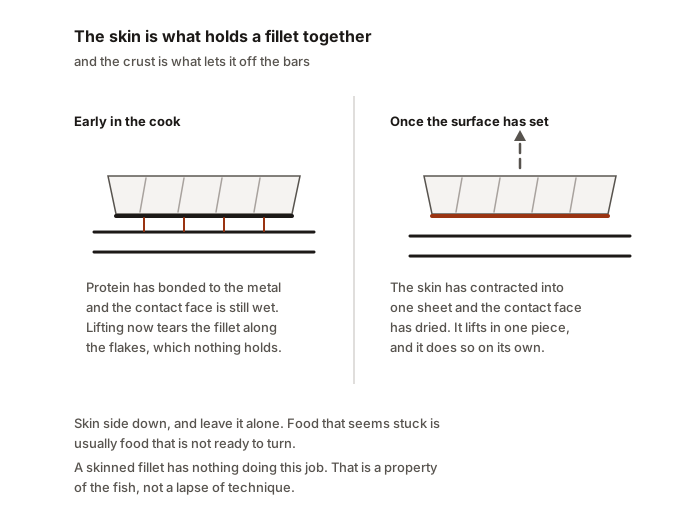
The skin, which is what holds a fillet together, was not there.
occasionalSigns it is this one
- The fillet was skinless, or was placed skin-up and turned onto flesh.
Why it happens: Skin is the structural member of a fillet: it contracts, holds the flakes in a sheet and takes the mechanical load of the turn. A skinless fillet has nothing performing that job.
What to do
- Cook skin-on fillets skin-side down and serve from that side rather than turning at all. — next time, reliable
- If it is going to be turned, start it SKIN SIDE UP so the delicate flesh side cooks first and the skin is underneath to take the load of the turn. — next time, reliable
The Alaska Seafood Marketing Institute gives this as its standing instruction and adds a second reason for it: fat under the skin is drawn into the fillet as it cooks. BBQHQ's other remedy — never turn at all — is not the publisher's and is offered alongside rather than as its advice.
Next time
- Buy skin-on for the grill even if the skin is not going to be eaten.
What this covers
This is BBQHQ’s diagnosis for it fell apart, on the foods below.